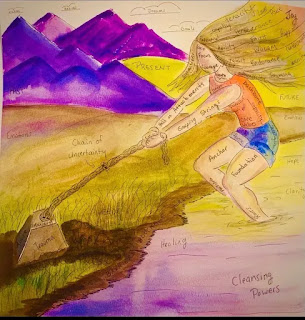
Why Am I So Tired When I Sleep All Night?

Why am I so tired when I sleep all night? Burnout and depression counseling in Newark, Ohio.
The alarm went off at six.
I'd slept eight hours. Nine, if you count the part where I lay there afterward, staring at the ceiling, trying to talk myself into getting up.
And I still felt like I hadn't slept at all.
Not groggy. Not the normal kind of tired you shake off in the shower. Heavy. Like somebody had filled my arms and legs with wet sand while I was out.
I stood under the water for a long time that morning, waiting to feel awake. It never really came.
Sound familiar?
If you’re awake right now, tired to the bone after a full night’s sleep, wondering why am I so tired when I sleep all night — welcome. You’re not lazy. You’re not broken. And you’re not the only one in Licking County doing the math every morning and having it not add up. I’m a burnout or depression counselor in Newark, Ohio, and I hear this one a lot.
What's happening
Here's the part that messes with people the most: the hours are real. You did sleep. Eight hours, nine hours, sometimes more. Your body was in the bed. Your eyes were closed. The clock says you got what you're supposed to get.
So you start arguing with yourself about it.
But the tired doesn't act like a sleep problem. A sleep problem gets better when you sleep. This doesn't. You can sleep all night and wake up like you ran a race in your dreams.
That's because sleep and rest are not the same thing.
Sleep is your body shutting down for the night. Rest is your body standing down. And those are two different jobs.
You can be asleep and still be on watch. Still braced. Still carrying the thing you carried all day, just carrying it lying down now. Your shoulders never dropped. Your jaw never unclenched. Your mind never put the weight down — it just held it quieter, in the dark.
I know that weight. I've carried it. The argument you never finished. The bill you can't quite cover. The person you're worried about. The grief you haven't had time to grieve. The job that takes everything and still wants more.
None of that stops at bedtime just because you closed your eyes.
And then there's the other kind of tired, the one that doesn't come from doing too much. It comes from feeling too little, for too long.
Depression doesn't always look like crying. Sometimes it looks like this: you sleep and sleep and never feel rested, because there's nothing to be rested for. The days have gone flat. You get up because the alarm says to. You move through the day like you're moving through water. By evening you're exhausted, and you haven't really done anything.
That kind of tired confuses people even more, because there's nothing to point at. No late nights. No big crisis. Just a slow leak, day after day, until even a full night's sleep can't fill the tank back up.
Burnout does the same thing from the other direction. You gave and gave until there was nothing left to give, and then you kept giving anyway. Your body kept the score the whole time. Now it's collecting.
Why it's happening — and what is it doing for you?
This is the question I ask about almost everything now. Not, “What's wrong with me?” That question just brings shame, and shame has never once helped anybody feel less tired.
Ask it differently:
What is it doing for you?
That sounds strange, talking about tiredness like it has a job. But try it on.
If I'm too tired to feel it, I don't have to face it. If I'm too tired to go, I don't have to show up. If I'm too tired to decide, nobody can ask me to choose. Tiredness is the one honest excuse nobody argues with — not other people, and not you.
Sometimes the exhaustion is your body pulling the emergency brake. Not to punish you. To protect you. It tried whispering. You kept going. So now it's shouting, the only way it knows how: by making everything heavy, so you finally stop.
Naming that doesn't make you less tired tomorrow morning. But it changes the fight. You're no longer fighting a broken alarm clock, or a lazy person, or a body that won't cooperate. You're listening to a part of you that has been working overtime and is asking, in the only language it has left, for something to change.
And here's the part nobody tells you: the shame you feel about being tired often costs more energy than the tiredness itself. You wake up exhausted, then spend the morning calling yourself lazy. You push through the day on willpower and caffeine, and by night you're more wrung out than when you woke up. Then you sleep, and it starts again.
What you can do in the next moment
Not your whole life. Not this week, even. Just the next moment. That's always been enough to start.
You don't have to fix the tired all at once. Try this instead:
Get up before you feel ready. Not because you feel rested — you won't. Because lying there arguing with the ceiling only makes the morning heavier. Feet on the floor. Water. Light, if you can get it. A window, a porch, a short walk to the end of the driveway. Your body needs a signal that the day has actually started.
Don't decide your whole life before coffee. Don't quit the job, end the relationship, or diagnose yourself before nine in the morning. Tired mornings lie. They make everything look permanent. Let the day get a little light in it before you believe what the tiredness is telling you.
Put one thing down. Not everything. One thing. The thing you can say no to today. The call you can return tomorrow. The worry you can write on a piece of paper and leave on the table instead of carrying it in your chest all day. Rest starts with setting something down, not with adding a better bedtime routine.
Move a little, even if it's slow. I know — moving is the last thing you want to do when you're this tired. But a body that never moves starts to believe it's stuck, and stuck feels a lot like tired. Five minutes outside. That's it. Not a workout. A walk to the mailbox counts.
Tell one honest person. Not perfect words. Just honest ones: “I slept all night and I still woke up exhausted, and I don't know why.” The people who love you can't help with a weight they never get to see. Saying it out loud keeps it from turning into a secret you carry alone.
And if the tired is most mornings — if you sleep and sleep and still wake up heavy, week after week — that is worth saying out loud to somebody. Not to the ceiling. To a real person who does this work.
I offer counseling for burnout and depression in Newark, Ohio, and by telehealth throughout Ohio, so you don't have to drive anywhere or sit in a waiting room to get help. You can talk from your own house. Sometimes that is the thing that finally makes it possible to ask.
Being tired when you sleep all night does not mean you're lazy. It usually means you've been carrying more than sleep can fix — and nobody has helped you set any of it down yet. That is work worth doing. And it starts, like everything else that ever changed for me, in the next moment.
Do it well. Not perfectly. Well. For the next moment, anyway.
By Tim Welch, LPCC, NCC, MAC, BC-TMH — addiction counselor in Licking County, offering online therapy throughout Ohio from Newark. Author of 2 Bits.
Learn more about working with me at twelch.com
Download the Free actually iCAN app: actuallyican.app